–By Jeanne Bessell
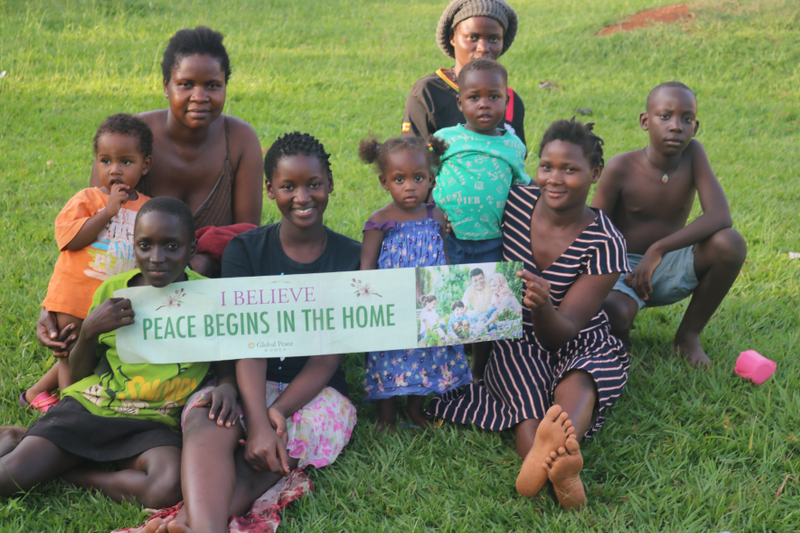
Did you know, peace doesn’t begin in governments, policies, or global agreements but in our homes?
It’s easy to think of peace as something distant, something negotiated in faraway rooms by people in positions of power. But the truth is, peace is first learned in the smallest and most intimate places: within our families.
Family is where we experience our first conflicts. It is also where we are given our first opportunities to repair, to forgive, and to understand.
And research confirms what many of us intuitively feel: children do not learn how to handle conflict primarily from what they are told—but from what they observe. The home becomes their first model, shaping how they will later respond to tension, disagreement, and emotional stress in the world beyond.
Every day, in ordinary moments, something profound is happening.
When a child takes something that doesn’t belong to them, and a parent chooses to guide rather than shame—that is peace.
When siblings argue and are helped to listen to each other instead of simply being separated—that is peace.
When a parent says, “I was wrong” or “I’m sorry”—that is peace.
These moments may seem small, but they are not insignificant. Studies have shown that when parents model calm and respectful conflict resolution, children are less likely to develop aggressive behaviors and more likely to build empathy, emotional regulation, and strong social skills. Over time, these early experiences become the foundation for how they relate to others—in friendships, in workplaces, and in their communities.
Peace is not simply the absence of conflict. It is the presence of skills: empathy, patience, accountability, and the ability to repair relationships. And these skills are not learned in theory—they are lived, repeated, and absorbed within the family.
Research also tells us that the emotional climate of the home has lasting effects. High levels of unresolved conflict can lead to increased anxiety, loneliness, and difficulty in social relationships. In contrast, homes where communication, repair, and mutual respect are practiced tend to raise individuals who feel more secure, more connected, and better equipped to navigate differences.
Families shape how we see others.
They shape how we respond to frustration.
They shape whether we build walls or bridges.
Many young adults, when reflecting on their upbringing, point not to a “perfect home,” but to what they witnessed in moments of tension. They remember parents who didn’t avoid conflict, but handled it with respect. Parents who listened. Parents who apologized. And they often carry those same patterns into their own relationships, workplaces, and communities.
In a world that often feels divided and uncertain, the role of the family becomes even more essential. Not because families are perfect—they are not—but because they are where growth is possible. Where mistakes are made, and, hopefully, where grace is practiced.
Raising children is not only about helping them succeed individually. It is about forming people who can live with others, who can navigate differences, and who can contribute to a more peaceful world.
And this work does not require perfection. It requires intention.
It looks like choosing connection over control.
Listening before reacting.
Repairing after rupture.
Modeling the very peace we hope to see beyond our walls.
So perhaps the question is not only why families matter for peace, but also:
What kind of peace am I cultivating in my home today?
How do I respond when conflict arises?
What am I modeling for my children in moments of tension?
Because the peace we hope for in the world begins much closer than we think.
It begins with us.
It begins at home.