“Peace does not mean an absence of conflicts; differences will always be there. Peace means solving these differences through peaceful means, through dialogue, education, knowledge, and through humane ways.” These words by the Dalai Lama capture a profound truth about peace: it begins in the way we relate to one another. Before peace can exist between nations or within communities, it must first exist in our homes. Families are where individuals learn to love, to listen, and to resolve conflicts with understanding. When families are strong and relationships are healthy, they become the foundation for peaceful societies.
The Global Peace Foundation (GPF) has long emphasized that women and families are at the heart of peacebuilding. GPF’s approach is rooted in the belief that families are the first schools of love, character, and service. Within families, values such as love, empathy, forgiveness, respect, and responsibility are cultivated. These values shape how people interact with others in their communities and beyond. When a family learns to communicate with love and mutual respect, peace radiates outward, strengthening social harmony and stability.
Women play an especially vital role in this process. As mothers, caregivers, mentors, and community leaders, they hold a unique position to influence attitudes and foster environments of compassion and cooperation. Recognizing this, GPF and its women’s division, Global Peace Women (GPW), have continued to implement programs that strengthen families and empower women as peacebuilders. One such inspiring initiative recently took place in Nepal, demonstrating how understanding and love within families can ripple out to create harmony in communities.
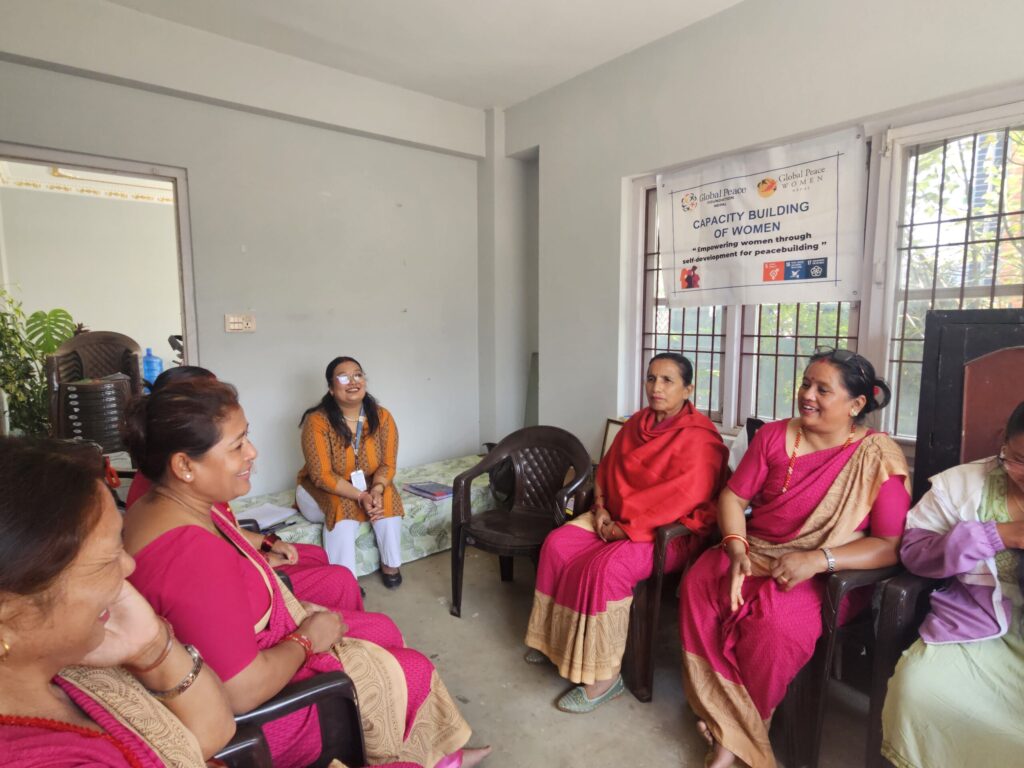
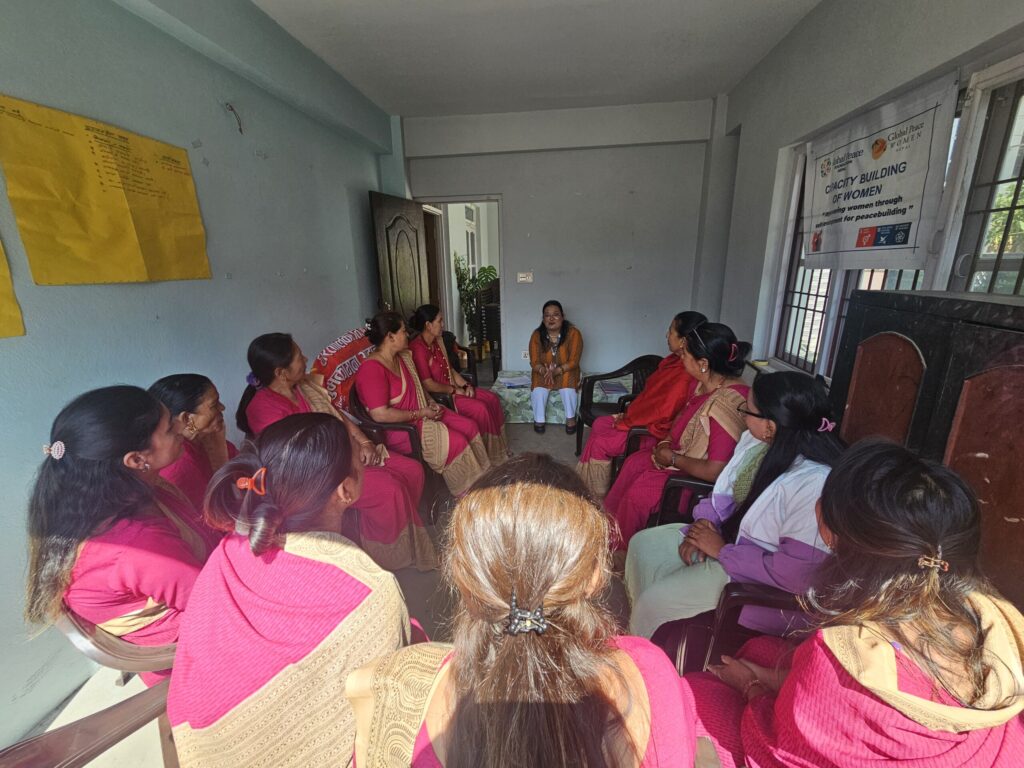
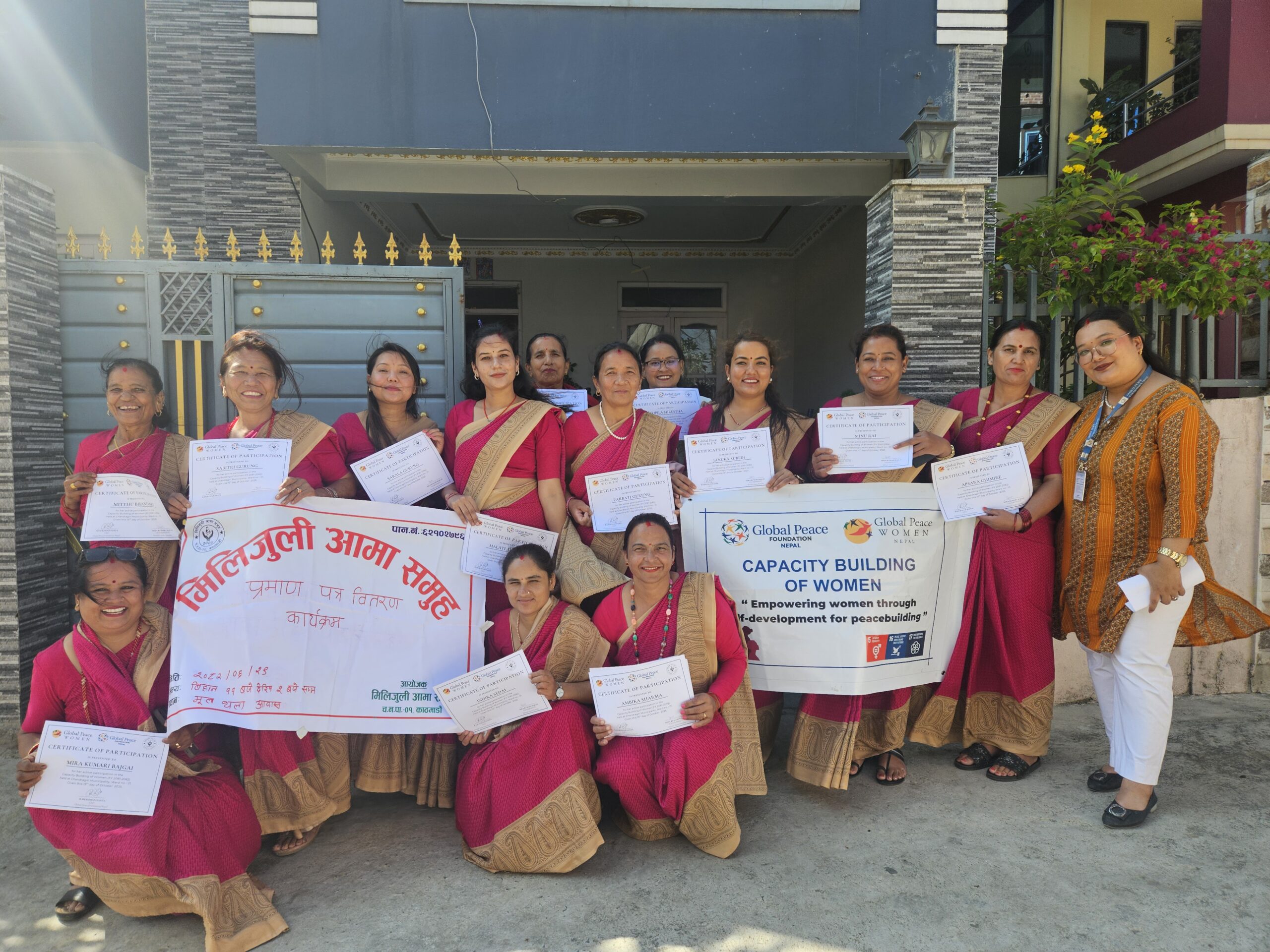
On October 15, 2025, GPF Nepal, in collaboration with GPW, hosted a heartwarming session titled “Strengthening Family Bonds through Love Languages” at Chandragiri Municipality Ward No. 1. The session brought together fourteen incredible women from Milijuli Aama Samuha, a mothers’ group dedicated to promoting family well-being and unity. This event was part of the Capacity Building of Women Project, a series of trainings designed to equip local women with practical knowledge and leadership skills to foster peace at home and in their communities.
The session focused on the concept of the five love languages, which include words of affirmation, acts of service, receiving gifts, quality time, and physical touch. Through guided discussions and a love language test, participants explored how each person gives and receives love differently. They discovered their primary love languages and reflected on how these insights could improve communication and understanding in their families.
Many of the women expressed excitement about sharing the love language test with their loved ones. They recognized that misunderstandings often stem from not knowing how others prefer to express or receive affection. Through laughter, stories, and deep reflection, the participants came to see that recognizing different ways of expressing love helps build empathy and patience. They
agreed that learning about love languages was not only about romantic or family relationships but also about creating stronger communities based on mutual understanding and care. The room was filled with warmth and connection, as the women shared personal experiences and supported one another’s journeys of growth.
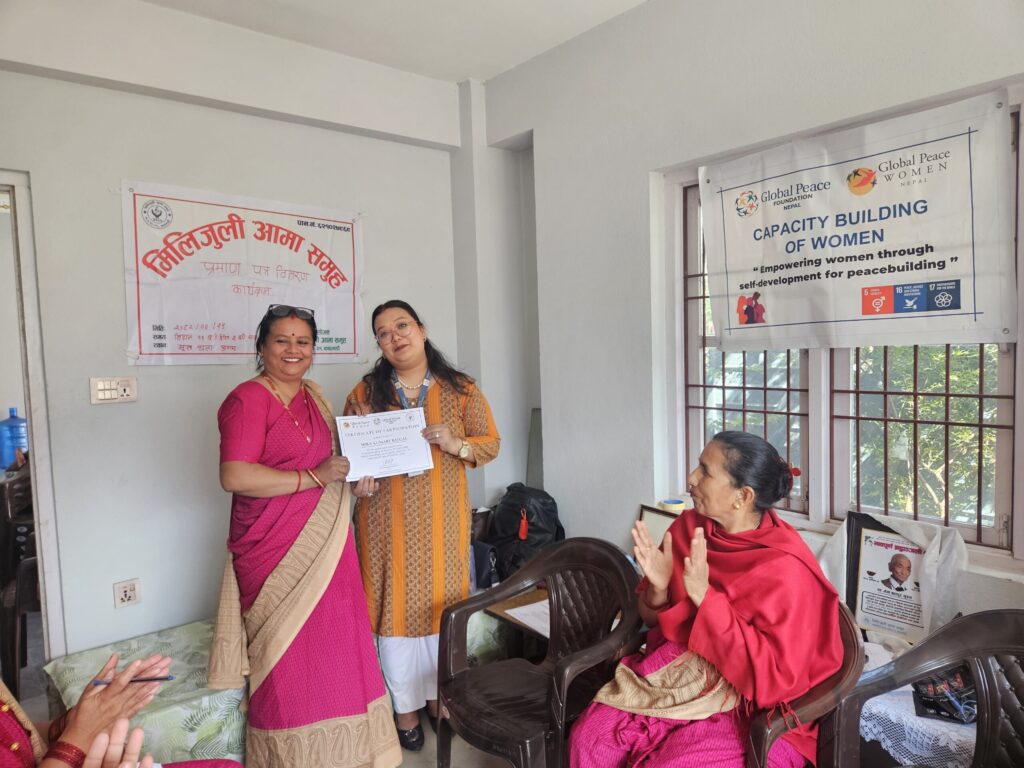
The session concluded with a certificate distribution ceremony, symbolizing both the completion of the workshop and the celebration of the women’s commitment to strengthening their families. It also marked the end of the Capacity Building of Women Project, which over the past weeks has empowered women in the community through a variety of training and awareness sessions on family leadership, communication, and peacebuilding.
Global Peace Women continues to advance this mission globally by uplifting women as moral and innovative leaders in their homes and societies. Through its programs, GPW encourages women to build nurturing families, model strong values, and engage in service that strengthens communities. GPW believes that the home is the smallest yet most powerful unit of peacebuilding; the place where future leaders learn the habits of heart and mind that create a peaceful world.
When families communicate with compassion and women are empowered to lead with purpose, they build communities that stand on the solid ground of peace. Strengthening families is, therefore, not just a social goal; it is the heart of peacebuilding itself.
Learn more about Global Peace Foundation’s approach to Women and Families in Peacebuilding.
Explore how Global Peace Women advances peace by building values-driven models that empower women and families as peacebuilders in communities, nations, and the world.