
by Jeanne Bessell
When we think of community leaders, we often picture elected officials, business owners, teachers, or nonprofit directors. These individuals certainly play important roles. Yet some of the most influential leaders in any community rarely receive public recognition. They are parents and families.
Every day, families help shape the life of their communities through acts of service, volunteering, mentoring, organizing events, supporting schools, helping neighbors, and contributing to local organizations. In doing so, they not only strengthen their communities today but also raise the next generation of citizens, volunteers, and leaders.
Strong communities are not built only in government offices or boardrooms. They are built in homes where parents teach responsibility, compassion, and service. They are built by families who choose to contribute to the well-being of others. In many ways, families are the first and most enduring leaders of the community.
Families Are a Powerful Force for Community Good
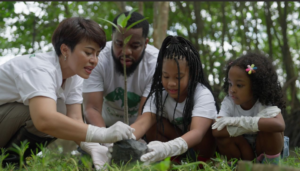 Across the world, millions of parents and family members give their time to support schools, faith communities, youth programs, sports teams, neighborhood initiatives, and charitable organizations. Research consistently shows that volunteers contribute billions of hours of service every year, representing an enormous contribution to society.
Parents are among the most active volunteers because so much community life revolves around children and families. They organize school events, coach sports teams, mentor young people, participate in fundraising efforts, serve on community committees, and support programs that benefit families and children.
Many of the activities that enrich community life would not exist without the commitment of parents and families. School programs, youth activities, community celebrations, and support networks often depend on ordinary people who are willing to give their time and energy for the benefit of others.
These acts may seem small when viewed individually, but together they form the foundation of thriving communities.
Families Create Social Capital
Researchers often use the term social capital to describe the networks of trust, relationships, and cooperation that help communities flourish.
Social capital is created when people know one another, trust one another, and work together for common goals. It is found in neighbors helping neighbors, families supporting one another during difficult times, parents sharing resources and knowledge, and community members coming together to solve problems.
Families are among the primary builders of social capital.
When parents volunteer at schools, participate in community organizations, attend local events, or simply take time to know their neighbors, they strengthen the bonds that connect people. These relationships create resilience. Communities with strong social connections are often better able to respond to challenges, support vulnerable members, and maintain a sense of unity during difficult times.
In a world where many people experience loneliness and isolation, families play an important role in creating the relationships that hold communities together.
Children Learn Community Leadership by Watching
 Perhaps the most remarkable contribution families make is not only what they do today, but what they teach for tomorrow.
Children learn far more from what they observe than from what they are told. They watch how adults treat others, how they respond to challenges, and whether they choose to serve their communities.
Researchers have found that young people whose parents volunteer are significantly more likely to volunteer themselves. When children grow up seeing service modeled in their homes, they learn that contributing to the community is simply part of what responsible citizens do.
Imagine a child watching a parent help organize a school event, deliver meals to a family in need, clean up a local park, or mentor a younger child. To the adult, it may feel like a routine act of service. To the child, it is a lesson in leadership.
The message is powerful:
Communities do not thrive because someone else takes care of them. Communities thrive because ordinary people choose to serve.
Those lessons often stay with children for a lifetime.
The Ripple Effect of Family Service
The influence of family service extends far beyond a single volunteer activity.
When a parent volunteers, the community benefits immediately. A school event runs smoothly. A sports team receives coaching. A family in need receives support. A neighborhood project is completed.
At the same time, children are learning valuable lessons about empathy, responsibility, cooperation, and leadership.
As those children grow, many carry these values into adulthood. They become volunteers, mentors, teachers, coaches, community organizers, and leaders in their own right. In turn, they model these same behaviors for their children.
One act of service can therefore create a ripple effect that extends across generations.
The impact of family leadership is both immediate and lasting.
Families and the Building of Peace
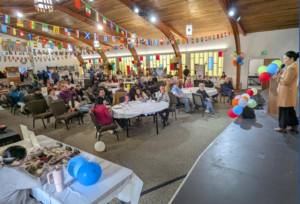
Community leadership is not only about organizing projects or leading organizations. At its heart, leadership is about creating conditions where people can flourish together.
Families contribute to peace in countless ways. They teach children how to resolve conflicts, show kindness, take responsibility, respect others, and care for the common good. They model cooperation and service. They help build trust between neighbors and strengthen the relationships that hold communities together.
Every time a family chooses to serve rather than withdraw, to contribute rather than remain passive, they help create a stronger and more peaceful community.
Peace is not built only through national policies or international agreements. It is also built through the daily choices of ordinary families who invest in the well-being of those around them.
A Call to Families
Many parents do not see themselves as community leaders. They may think leadership belongs to people with titles, positions, or public recognition.
Yet leadership often begins with something much simpler: showing up, helping others, and contributing to the common good.
The parent who volunteers at school, the family that welcomes a new neighbor, the grandparents who mentor younger families, the mother who organizes a community activity, and the father who coaches a local team are all exercising leadership.
Their influence may not appear in headlines, but it shapes the character and future of their communities.
Families are not only raising children. They are raising future citizens, volunteers, neighbors, and leaders. Through their example, service, and commitment to others, they help build communities that are stronger, more connected, and more peaceful.
The next time we think about community leadership, perhaps we should begin with the family. For it is often there, in the ordinary acts of service and care that take place every day, that the foundations of a thriving community are laid.