
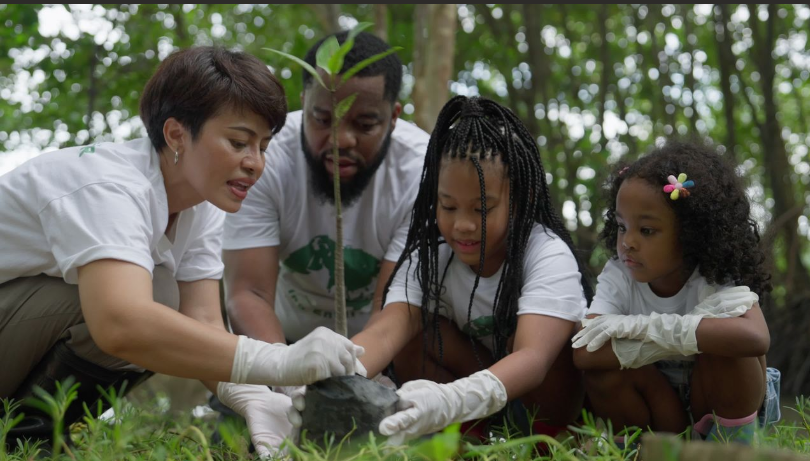
The first lesson in leadership begins at home.
– By Jeanne Bessell
Over the last month, we had conversations with youth about the impact their parents and families have had on their lives. We saw, over and over again, that there is a big impact. Positively, they shared about seeing their parents serve their communities, and it has become a part of their life aspirations – whether through their career or nonprofit and volunteer work. We were inspired to write this blog because of what they said.
When we think of youth leadership, we often picture confident teenagers leading clubs, organizing service projects, or speaking up for causes they believe in. But those qualities don’t appear overnight. More often than not, they are first nurtured at home – from the moment they arrive to the family.
Children learn leadership long before they ever hold a title. They learn it by watching the adults around them.
When parents volunteer, help a neighbor, coach a sports team, serve at their school, or simply step in when someone needs help, they send a powerful message: our lives are meant to make a difference. Research consistently shows that parents who value civic engagement and actively serve their communities are more likely to raise children who volunteer and develop a strong sense of responsibility toward others. The example parents set often becomes the example their children follow.
This kind of leadership is different from seeking recognition or success. It is leadership rooted in service.
Young people who grow up seeing service as a normal part of life are more likely to ask, “How can I help?” instead of “What’s in it for me?” They begin to notice people who are overlooked, look for ways to solve problems, and understand that every person has something valuable to contribute.
The benefits extend beyond the community. Studies have found that children and teenagers who volunteer are more likely to flourish, demonstrate positive behaviors, and develop a greater sense of well-being. Service not only strengthens communities—it helps shape resilient, compassionate young people.
The world doesn’t simply need more young leaders. It needs more young leaders whose hearts are shaped by compassion, humility, and a desire to serve.
That journey begins with families.
Every act of kindness a child witnesses, every volunteer project they join alongside a parent, every conversation about helping others is planting seeds for the future. Today’s small moments of service become tomorrow’s generation of community builders.
If we want to raise young people who lead with integrity and purpose, perhaps the most important question isn’t, “How do we teach leadership?” but rather, “What kind of leadership are we modeling at home?”